Air Quality & Burning Season
Why Chiang Mai's Air Gets So Bad: The Basin Effect
The causes of Chiang Mai's seasonal haze — agricultural burning, the Doi Suthep basin and inversion effect, and transboundary smoke.
5 min read
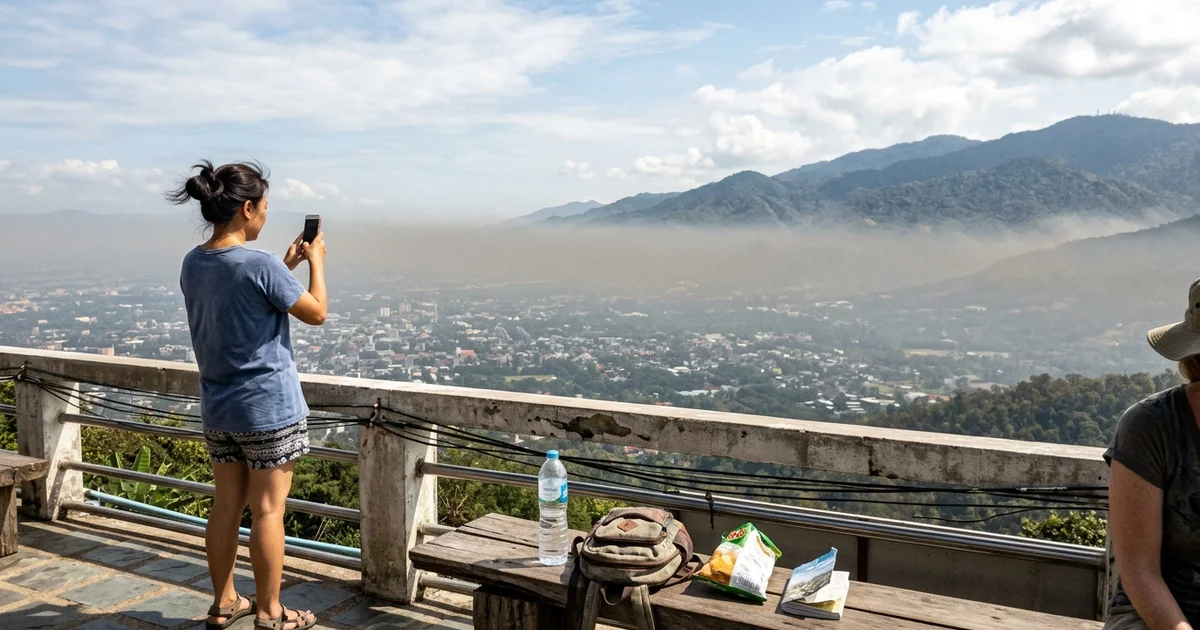
Three factors, stacked
Chiang Mai’s seasonal air pollution is not a mystery, and it’s not simply “people burning fields.” It’s the interaction of three things, and understanding all three explains why the problem is stubborn.
This guide sits under our burning season hub, which covers what to do about it. Here we’re covering why it happens.
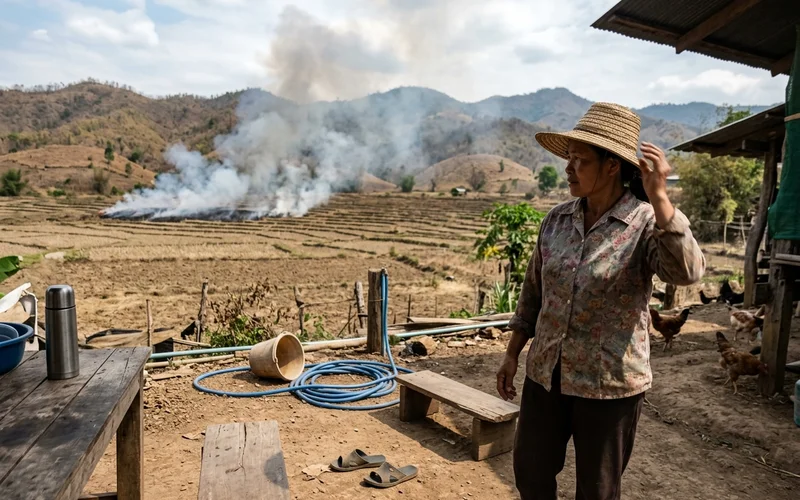
Factor one: the burning
In the dry months, clearing land by fire is the fastest and cheapest method available to smallholder farmers across the region. Crop residue from maize, rice and sugarcane is burnt off before the next planting. Forest floors are burnt to encourage the growth of prized wild mushrooms and to clear undergrowth.
The scale is enormous, and it isn’t confined to Thailand. Fires burn across northern Thailand, Myanmar, Laos and beyond during the same window, because they all share the same dry season and the same agricultural calendar.
This is the reason local burning bans have limited effect. A ban in Chiang Mai province addresses a fraction of the smoke reaching the city.
Factor two: the basin
Chiang Mai sits in a valley. Doi Suthep rises to the west, hills close in on other sides, and the city occupies the low ground between them.
That topography does two things. It limits how easily air moves horizontally out of the valley. And it creates the conditions for the second, more important effect.
Factor three: the inversion
Normally, air near the ground is warmer than the air above it, so it rises and carries pollutants upward and away. That vertical mixing is what keeps most cities breathable.
During the dry season, clear nights allow the ground and the air directly above it to cool rapidly. By morning, a layer of warmer air sits above a layer of cooler air — the reverse of the usual arrangement. This temperature inversion acts as a lid.
Smoke released under that lid has nowhere to go. It accumulates through the night and the early morning, which is why Chiang Mai’s worst readings often come at dawn, and why the haze visibly sits in a flat layer below the hills.
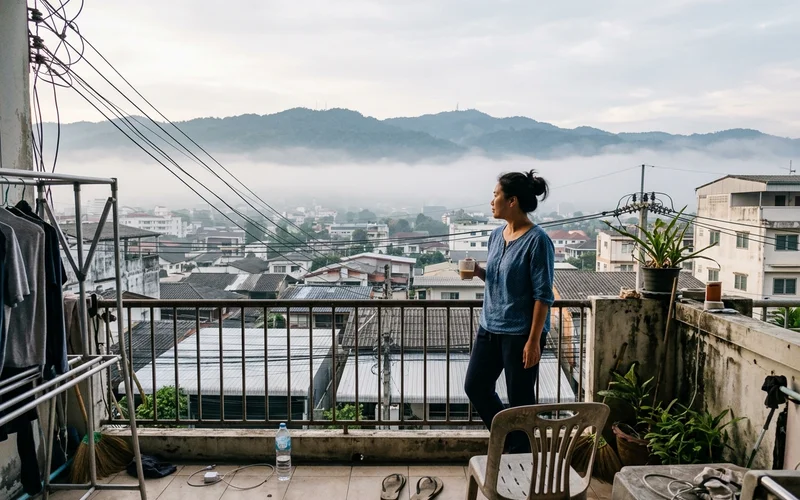
Why it ends the way it does
The season doesn’t taper. It stops.
Once the first substantial rains arrive — usually mid-to-late April — two things happen at once. Rain scavenges particulate matter out of the air directly, and the associated weather systems bring wind and vertical mixing that break the inversion.
The transformation is dramatic. A city with an AQI in the high hundreds can be clear within twenty-four hours of a serious storm. Anyone who has lived through one of these transitions will remember it.
For the calendar detail, see our guide to when burning season runs.
Why it’s hard to fix
Because the three factors are of different kinds. The geography is permanent. The meteorology is seasonal and uncontrollable. Only the burning is addressable, and it’s addressable across multiple national jurisdictions, involving millions of smallholder farmers whose economics currently favour fire.
Progress is being made — burning bans, satellite monitoring, subsidised alternatives to burning, regional agreements — but it’s incremental. For anyone living here, the sensible planning assumption is that this remains an annual feature for the foreseeable future.
That’s not a reason to avoid the city. It is a reason to plan your year around it deliberately.