Air Quality & Burning Season
Sealing Your Room & Staying Indoors Safely
Practical steps to reduce indoor smoke exposure in Chiang Mai — sealing your room, positive-pressure setups, N95/KN95 masks and safe venues.
5 min read
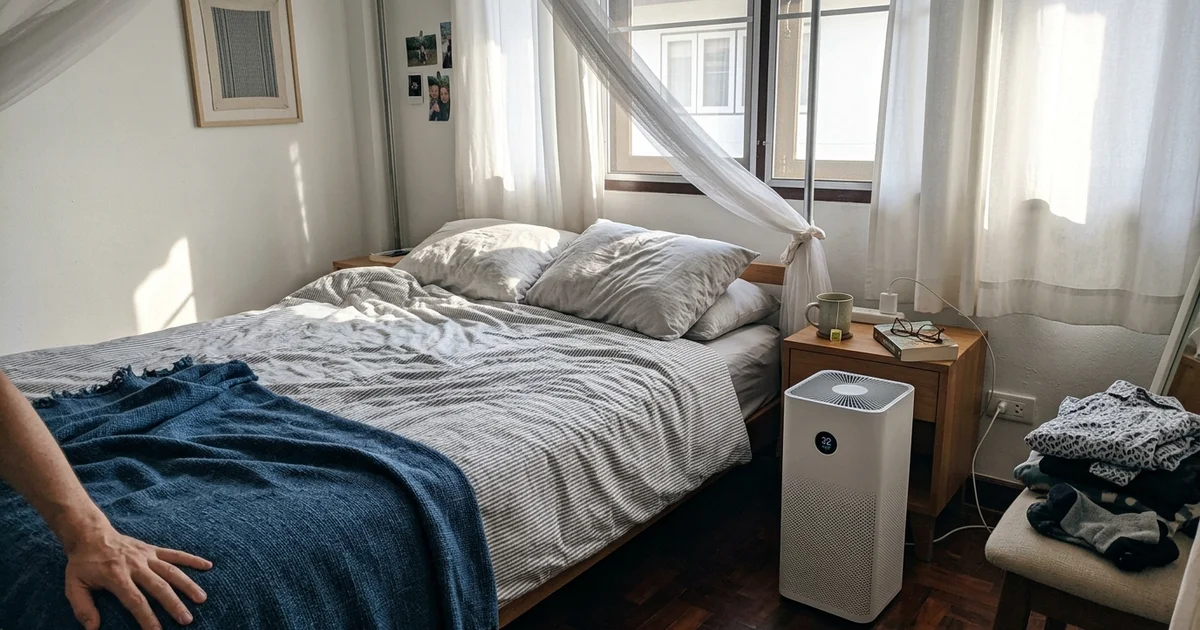
The goal is one good room
You cannot filter a whole apartment effectively, and trying is expensive and disappointing. What works is choosing one room — almost always the bedroom, because you spend eight hours a night in it — and making that room genuinely clean.
Everything else is a bonus. This guide sits under our burning season hub, and pairs with the air purifier buyer guide for the hardware side.
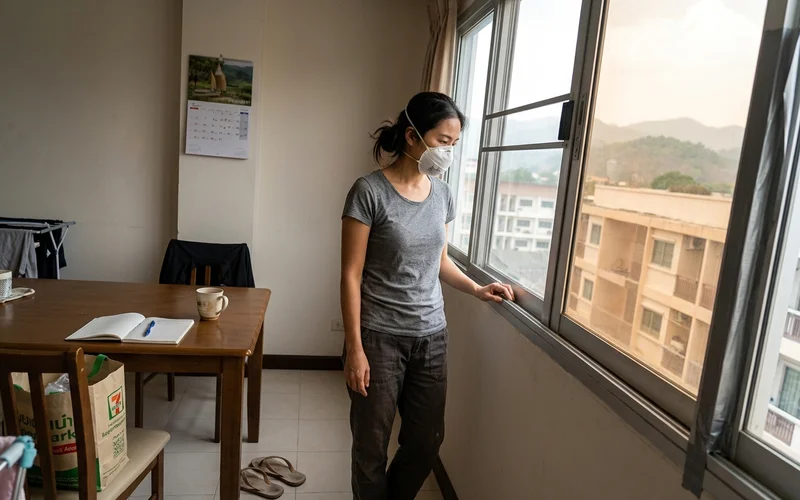
Sealing, step by step
Sealing is cheap and has more impact per baht than any other intervention. A purifier in a leaky room is fighting a continuous inflow of dirty air.
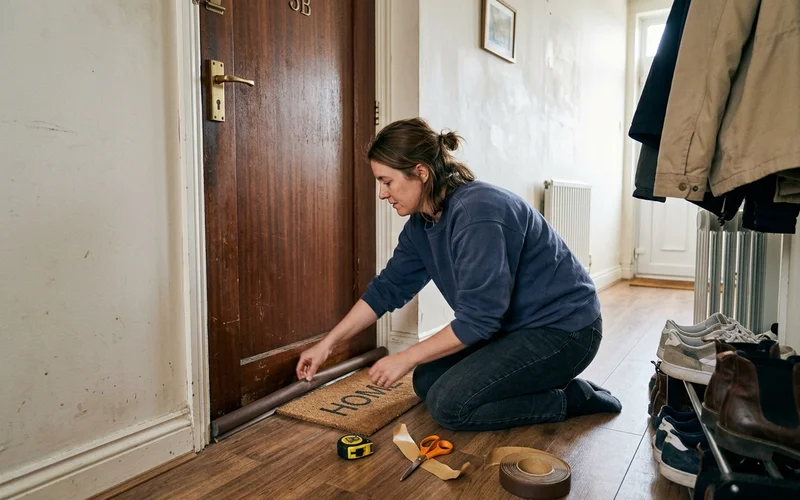
- Under the door. The single largest gap in most Thai apartments. A draught excluder strip or even a rolled towel makes an immediate measurable difference.
- Window frames. Older aluminium sliders leak badly. Weather-strip foam along the closing edges, and tape the fixed joints if they’re gappy.
- Air conditioning penetrations. Where the pipework passes through the wall there’s often a hole loosely packed with foam. Seal it properly.
- Bathroom and kitchen extractors. These pull air in from outside when not in use. Cover them during heavy smoke.
- Any vents. Purpose-built ventilation grilles are ventilation into a smoke-filled outdoors.
Materials cost a few hundred baht at any hardware shop or Homepro. The job takes an afternoon and you keep the benefit for years.
Then the purifier
With the room sealed, a modestly sized HEPA unit will pull the room down to low readings and hold it there. Without sealing, the same unit runs continuously and never quite wins.
Practical points:
- Run it continuously during the season, on a low setting overnight rather than blasting it for an hour.
- Keep the door closed. Every opening resets some of the work.
- Measure. A personal PM2.5 monitor tells you whether it’s working. Guessing doesn’t.
- Replace filters. Smoke loads filters far faster than normal dust. Budget for at least one replacement per season.
Positive pressure, if you want to go further
The advanced version: rather than only recirculating room air, some people set up a filtered air intake that pushes clean air into the sealed room, creating slightly higher pressure inside than outside. Air then leaks outward through remaining gaps rather than inward.
It requires a fan, a HEPA filter and some construction, and it’s overkill for most people. But for anyone with a serious respiratory condition, or a nursery, it’s the most effective residential setup available.
Masks, when you go out
You will need to leave the room. When you do:
- N95 or KN95, properly fitted. Nose bridge pinched, no gaps at the cheeks. If your glasses fog, air is leaking.
- Not surgical or cloth masks. They do very little against PM2.5.
- Replace them. They load up with particulate and stop performing.
- Keep a spare in your bag. The day you forget is the day the reading spikes.
Where else has clean air
During the worst weeks, the reliable indoor options are:
| Venue | Typically |
|---|---|
| Large shopping malls | Good filtration, comfortable, free to sit in |
| Hospitals | Well filtered |
| Cinemas | Sealed and filtered |
| Modern gyms | Often run purifiers, ask |
| Coworking spaces | Many run purifiers during the season |
| Air-conditioned cafés | Variable, ask if they filter |
Anywhere with an open frontage, an outdoor terrace or ceiling fans instead of air conditioning will be at or near outdoor levels. In March, that includes many of the city’s most pleasant places, which is one of the genuine costs of the season.