News
Chiang Mai Cool Season 2026–27: New Openings & What's Worth Knowing
As Chiang Mai's cool season begins, here's a round-up of new cafés, restaurants and openings worth knowing, plus what's changed around town this year.
5 Sept 2026
Eat & Drink
The central hub for eating in Chiang Mai — an introduction to Northern Thai (Lanna) cuisine, where to find the best Khao Soi, the top street food and markets, and the city's Michelin Bib Gourmand stalls.
In this section
What makes Lanna food different from the Thai food you know, dish by dish, with how to order it.
Where to eat the city's signature dish, from the famous names to the neighbourhood shops residents actually use.
Which markets to eat at, what time to go, and the stalls worth crossing town for.
The Bib Gourmand list and what it does and doesn't tell you about eating well here.
If your idea of Thai food comes from Bangkok or from Thai restaurants abroad, Chiang Mai will reset it. Northern Thai (Lanna) cuisine is its own tradition: less coconut milk and sugar than the central and southern styles, more bitterness, herbs, fermentation and chilli dips, and sticky rice rather than steamed rice as the default carbohydrate.
That doesn’t mean you can’t get an excellent pad thai here. It means the most interesting eating in this city is the food you can’t get elsewhere.
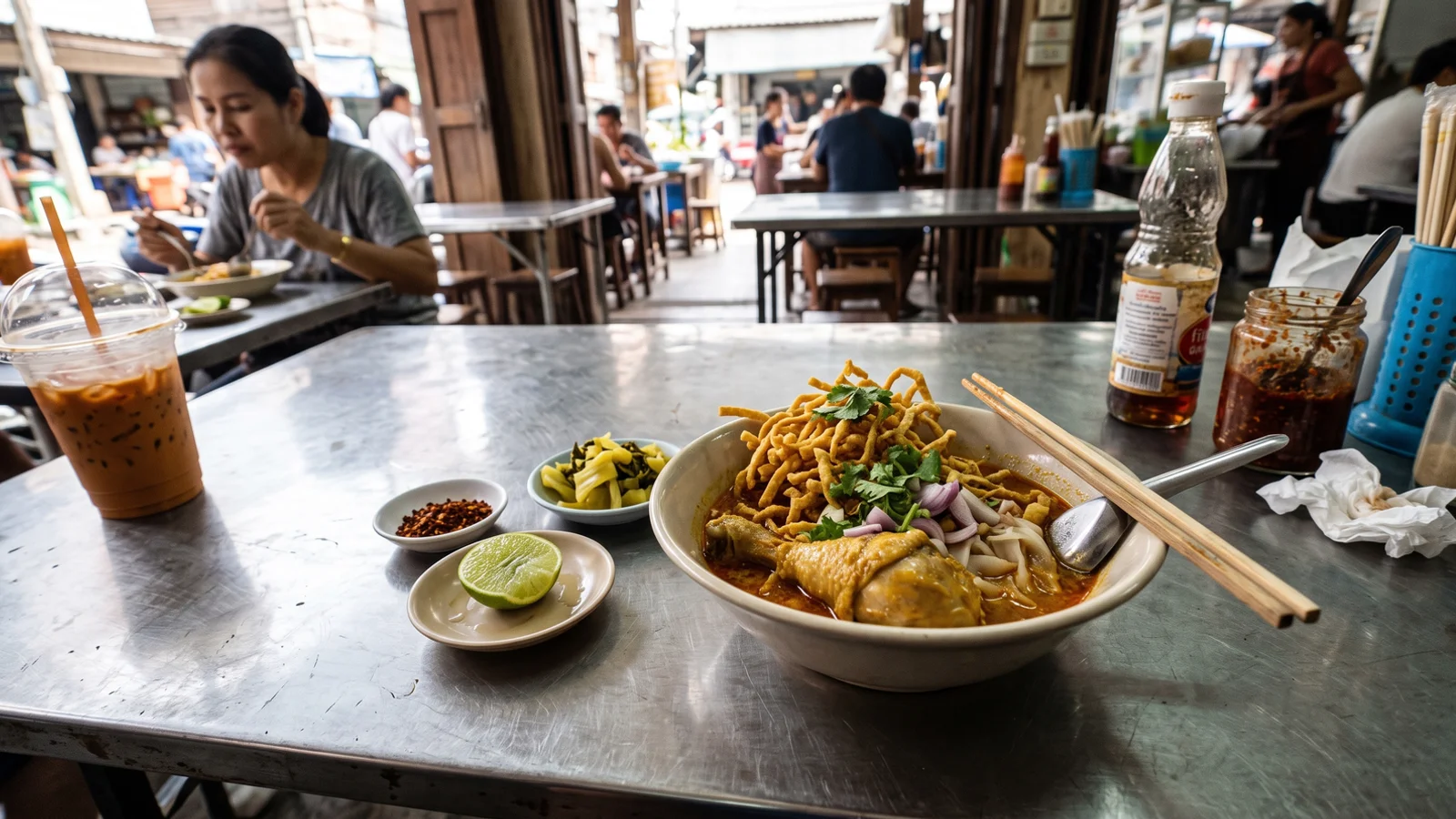
Khao Soi is the one everyone comes for, and it earns the attention. Egg noodles in a coconut-and-curry broth, topped with a nest of fried noodles, served with pickled mustard greens, raw shallot and a wedge of lime that you’re expected to use.
Sai Oua is the northern herb sausage — lemongrass, galangal, kaffir lime leaf and chilli, grilled over charcoal and sold by weight. Buy it at a market and eat it standing up.
Gaeng Hang Lay is a slow-cooked pork belly curry with ginger and tamarind, Burmese in origin and unmistakably northern in practice.
Nam Prik Ong — a tomato and minced pork chilli dip — is the gateway to the whole nam prik family, eaten with sticky rice and raw vegetables.
There are three tiers, and residents move between all of them:
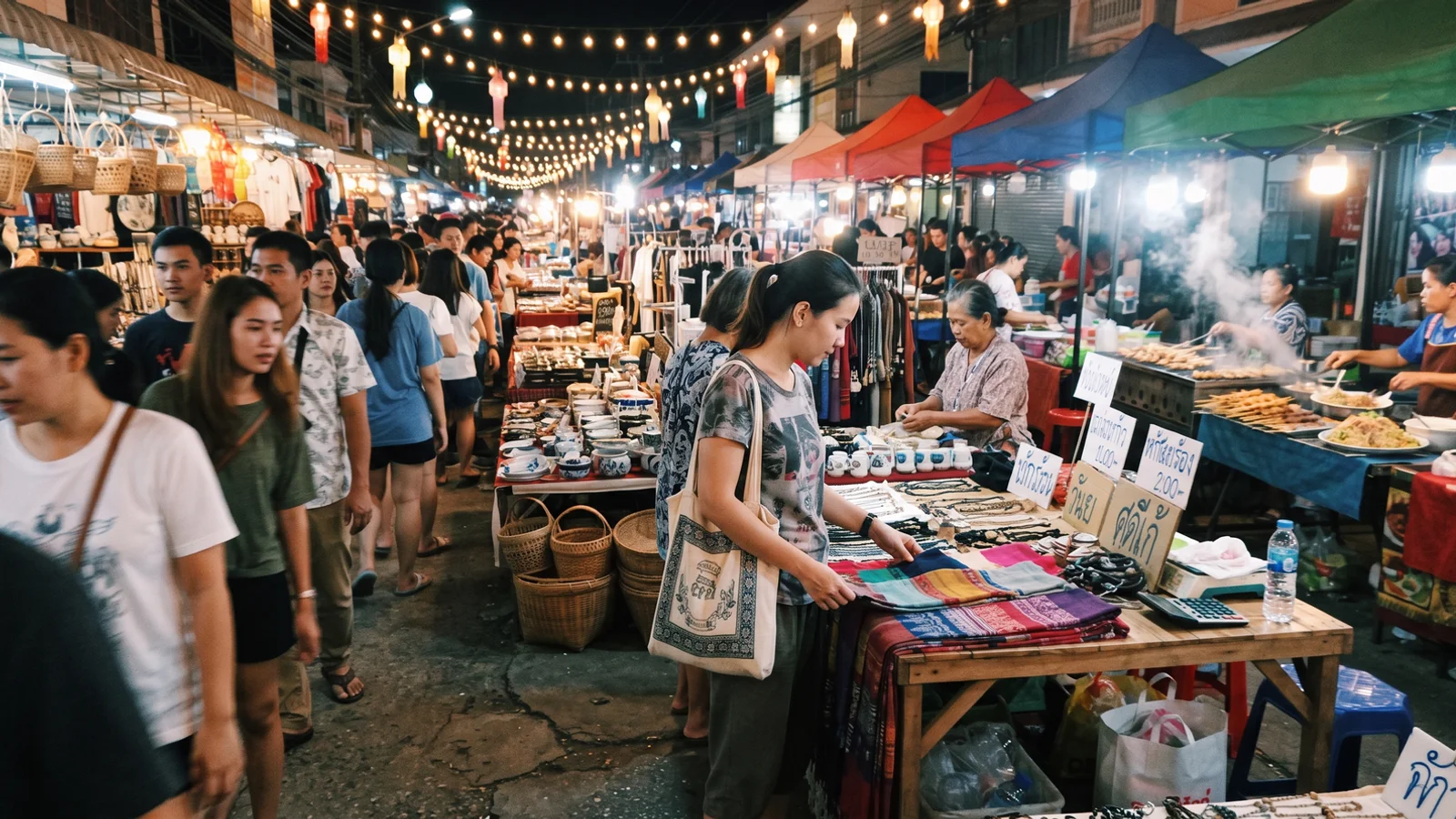
Markets. Warorot for daytime and takeaway northern specialities, Chang Phueak for evening street food. Both are covered in detail in our markets guides.
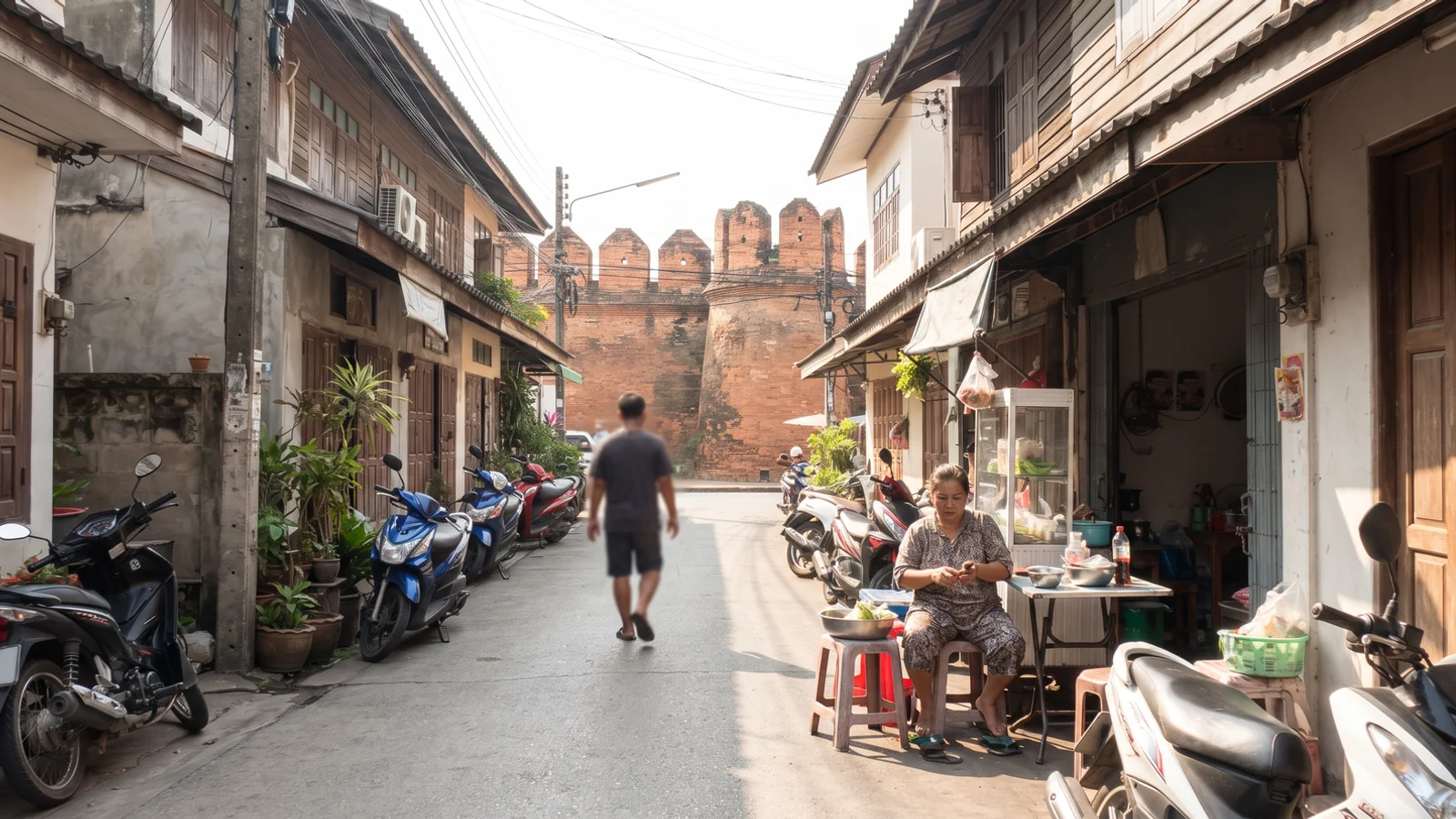
Neighbourhood shops. The unglamorous, un-airconditioned, plastic-stool restaurants that do one or two things extremely well. This is where most of the best food in Chiang Mai is, and the price is usually under 70 THB.
Restaurants. From long-running Thai institutions to the modern Lanna kitchens doing something genuinely new with the region’s ingredients. The Michelin Bib Gourmand list is a decent starting point here, though it skews toward places that can handle a guidebook crowd.
If you’re new to the city, start with the Northern Thai explainer, then the khao soi guide. If you’re settled and want to eat better rather than differently, the street food and Bib Gourmand guides will give you a list you can work through over months.
For coffee, cafés and the work-friendly side of Chiang Mai’s food scene, that lives in our cafés and coffee hub.
Guides
Every evergreen guide we've published on restaurants & thai food in Chiang Mai.
Scenario
A guide to street-food eating in Chiang Mai by market and area — the key markets, must-try dishes, and tips on hygiene, ordering and timing.
6 min read
What to expect
Chiang Mai's Michelin Bib Gourmand and comparable stalls — the listed vendors, what to order, prices and how to find them.
5 min read
Explainer
What makes Northern Thai (Lanna) cuisine different — Khao Soi, Sai Oua, Gaeng Hang Lay, Nam Prik Ong, and where to try each.
6 min read
Scenario
The best Khao Soi spots in Chiang Mai by area, with prices and what makes a great bowl — from famous names to local favourites.
5 min read
Got questions?
Keep exploring
Newsletter
Twice a month: new openings, events, changes worth knowing about, and our latest guides. No filler.

The Chiang Mai Brief
Twice a month we send the openings, changes and guides worth knowing about. It takes two minutes to read.