Air Quality & Burning Season
Should You Leave Chiang Mai During Burning Season?
An honest framing of the stay-or-go decision for Chiang Mai's burning season — health risk factors, the cost of leaving, and who should go.
5 min read
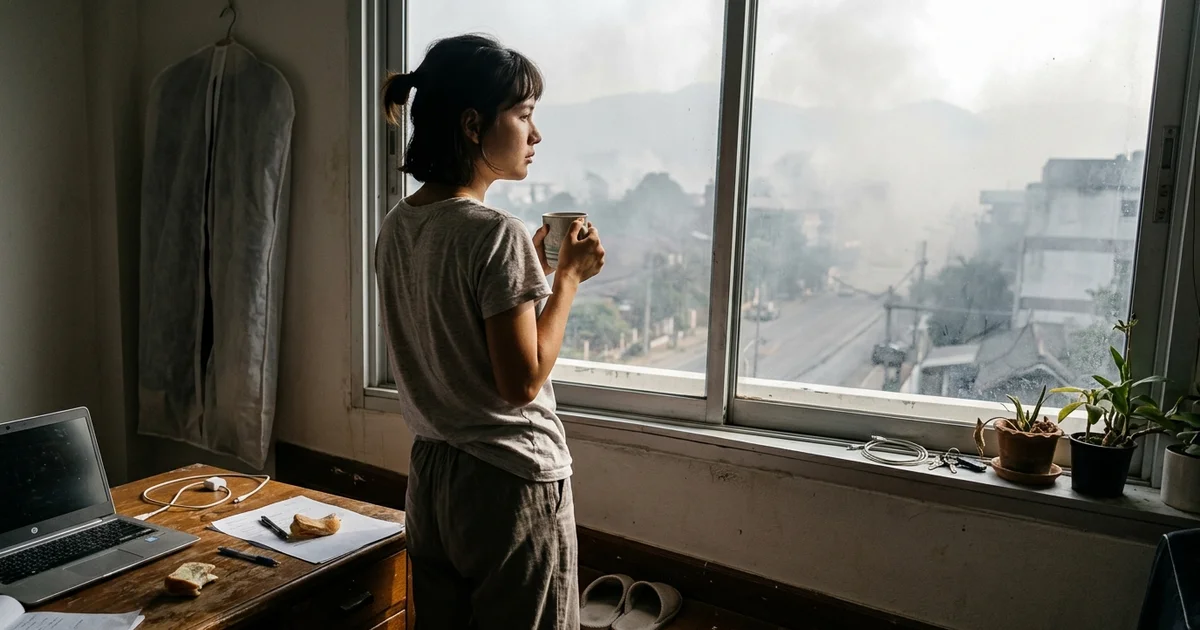
There is no single right answer
Some long-term residents leave every year without hesitation. Others have been through fifteen burning seasons and stayed for all of them. Both groups are being sensible, because the decision depends on facts about you rather than facts about the smoke.
This guide is a framework for making the call. For the season itself see our burning season hub, and for destinations, where to escape the smoke.
Start with the health question
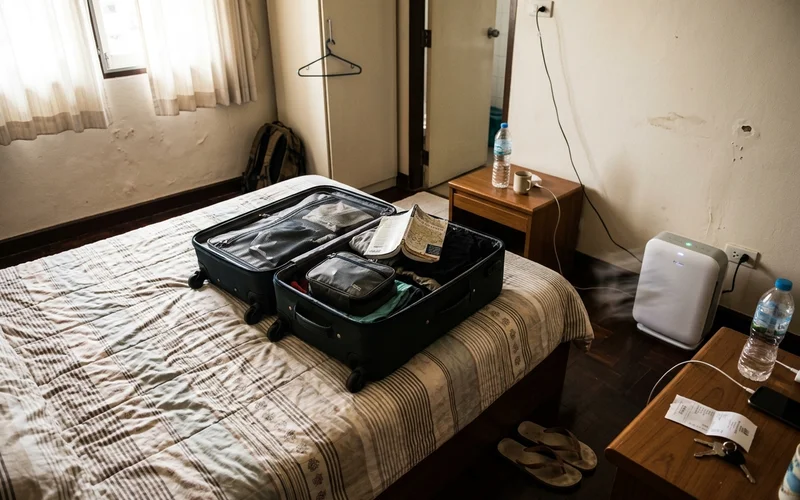
The risk from fine particulate matter is real and dose-dependent. Sustained exposure at the levels Chiang Mai reaches in March is associated with respiratory and cardiovascular harm. That’s the honest baseline.
But dose matters enormously, and dose is controllable. Someone who sleeps in a sealed room with a purifier, works in a filtered office, wears an N95 outdoors and doesn’t exercise outside is receiving a small fraction of the exposure of someone cycling to work each morning with the windows open.
So the health question isn’t “is the air bad” — it is. The question is what your realistic exposure will be given how you actually live.
Who should go
Treat leaving as the default if any of these apply:
- Diagnosed respiratory condition. Asthma, COPD, chronic bronchitis.
- Cardiovascular disease. Fine particulates are strongly implicated in cardiac events.
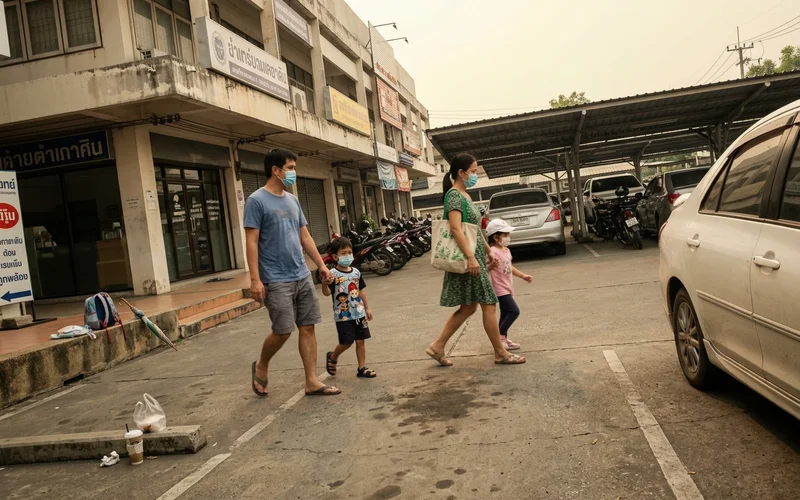
- Infants and young children. Developing lungs, and small children can’t reliably wear masks.
- Pregnancy.
- Age over roughly 70.
- You struggled last year. Persistent cough, sore throat, headaches and fatigue through March are your body’s own data.
Who can reasonably stay
Staying is defensible if:
- You’re a healthy adult with no respiratory history
- You can seal and filter your bedroom and your workspace
- Your work is indoors and doesn’t require outdoor exercise
- You’re willing to actually change behaviour for six weeks — masks, no outdoor running, windows shut
- You have the flexibility to leave later if a particular year turns severe
That last point is worth underlining. The most sensible position for many people is “staying, with an exit option.” Keep the flights bookable rather than booked, and watch the readings.
The costs of leaving
Be honest about both sides. Leaving costs:
| Cost | Typical |
|---|---|
| Flights and accommodation | 30,000–70,000 THB for four weeks |
| Chiang Mai rent still due | Your usual monthly rent |
| Work disruption | Variable, more if you have local commitments |
| Social and routine disruption | Real, if underrated |
And leaving buys: clean air for the worst weeks, a break, and often somewhere pleasant to be.
The costs of staying
Also real:
- Six weeks with no outdoor exercise
- Windows closed, terraces and outdoor cafés off the table
- The mental weight of checking readings every morning
- A recurring low-grade cough for many people
- Purifier and filter costs, which you pay either way
A decision path
- Are you in a high-risk group? If yes, go. Stop here.
- Can you genuinely seal and filter your bedroom and workspace? If not, either fix that or go.
- Does your life require being outdoors? If your wellbeing depends on running, cycling or riding, staying will be miserable.
- What did last March feel like? Trust your own experience over anyone else’s opinion.
- Can you afford to leave? If not, mitigate hard and plan an exit option for a severe year.
Most people who’ve lived here a few years land in the same place: leave if you can, mitigate properly if you can’t, and decide in January rather than in March.