Day Trips & Nature
How to Choose an Ethical Elephant Sanctuary Near Chiang Mai
How to choose a genuinely ethical elephant sanctuary near Chiang Mai — saddle-free / no-riding criteria, what to look for, red flags and examples.
6 min read
The word “sanctuary” means nothing
There is no regulator issuing the term. Any operation can call itself a sanctuary, and many have simply rebranded from trekking camp to sanctuary while changing very little about the animals’ lives.
That’s the problem this guide exists to solve. The good operations near Chiang Mai are genuinely good, and telling them apart from the rebranded ones takes about five questions. This guide sits under our day trips and nature hub.
The non-negotiables
An operation must meet all of these. Not most — all.
No riding. Under any framing. Not “bareback riding”, not “traditional riding”, not “just a short one”. If riding is available, the elephants have been trained to accept it, and that training is the problem.
No saddles or howdahs on site. Their presence tells you what happens when a different group visits.
No performances. No painting, no football, no dancing, no tricks. These are trained behaviours, not natural ones.
No bullhooks in use. Watch the handlers’ hands. A bullhook is a metal-tipped hook used for control, and its presence indicates control by pain.
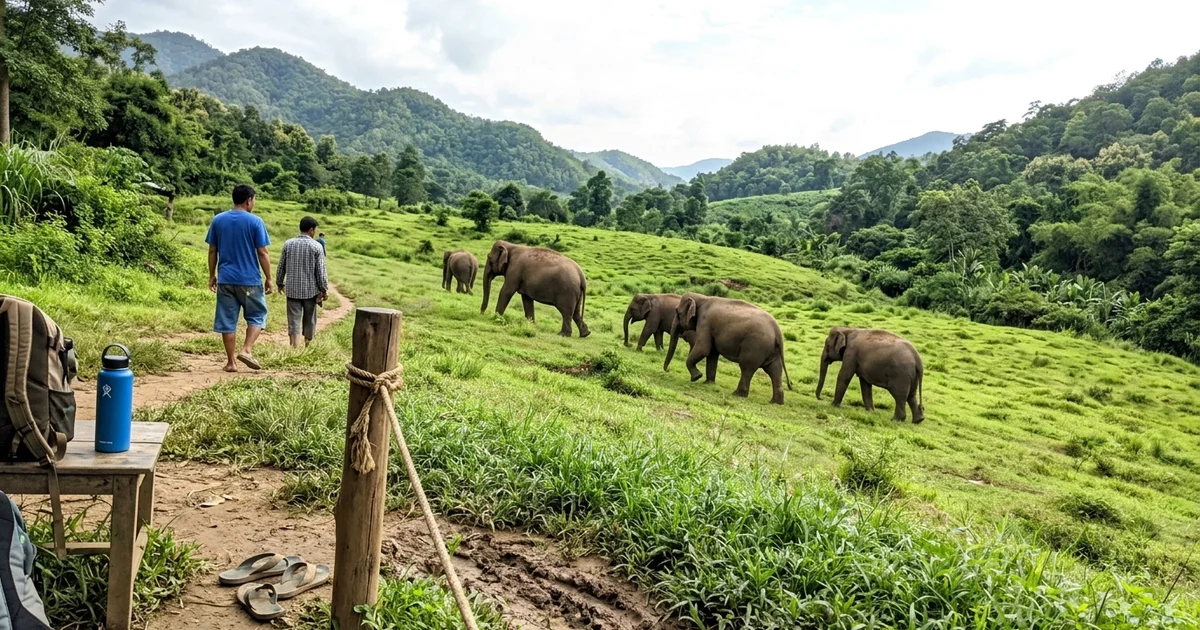
Space to move. Elephants should be walking, foraging, dusting themselves and interacting with each other rather than standing tethered at a feeding station waiting for the next group.
Limited visitor numbers. Twenty people is a visit. Two hundred is a theme park.
Most sanctuaries sit an hour or more outside the city, so this works best as a full day out — the same shape of trip as our Doi Inthanon day trip guide.
The good signs
Beyond the minimum bar, the better operations show:
- They can tell you each elephant’s history — where it came from, its age, its condition, and why it’s there
- Herd structure. Elephants socialising as a group rather than being individually managed for photographs
- No breeding for tourism. Rescue and retirement rather than supply
- Visitors kept at a respectful distance for much of the visit
- Mahout welfare — handlers who are paid, housed and trained, since elephant welfare and mahout welfare are linked
- Transparency about funding and where your money goes
Questions to ask before booking
Email or message these. How they answer matters as much as what they answer.
- Do you offer riding, in any form?
- How many visitors do you take per day?
- Are the elephants chained at any point? When and for how long?
- Where did your elephants come from?
- Do you breed?
- Do your mahouts carry bullhooks?
- How much of the visit involves direct contact?
A genuine operation answers all seven without hesitation and often with more detail than you asked for. Vagueness, deflection or a sales pitch in response is your answer.
On bathing
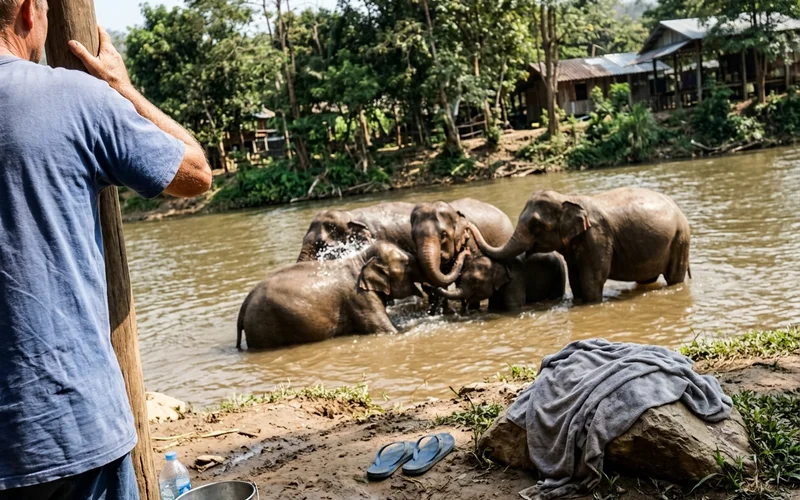
Elephant bathing has become contentious, and reasonably so. Some sanctuaries have stopped offering it, arguing that elephants bathing on command with tourists is still a performance.
Others allow visitors to observe from the bank while the elephants bathe themselves. That distinction — participating versus watching — is a good indicator of where an operation sits on the spectrum.
If bathing is offered as an activity you do to the elephant, treat it as a minor red flag rather than a disqualifier, and weigh it against the rest.
What a good visit actually looks like
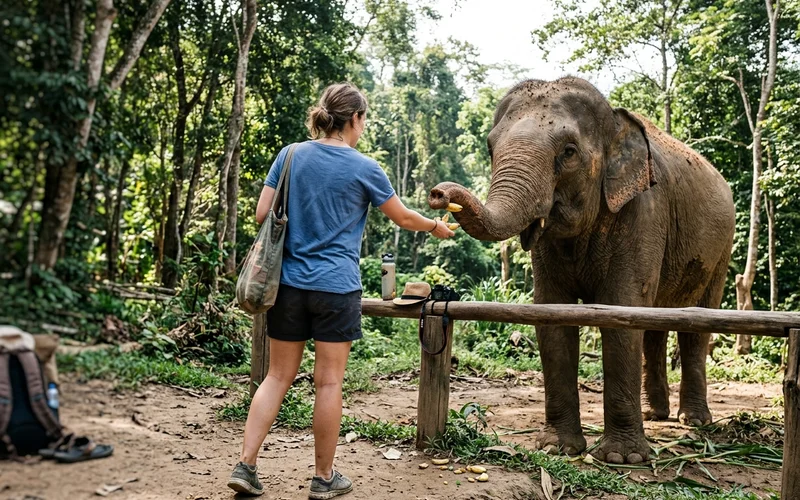
Quieter than the marketing suggests. You’ll spend a lot of time walking alongside a herd at a distance, watching them eat, listening to a mahout or guide explain what’s happening, and feeding them once or twice from a respectful distance.
You will take fewer photographs of yourself with an elephant. That’s the trade, and it’s the right one.
Where to look
Several well-regarded no-riding operations sit in the Mae Taeng and Mae Wang valleys north and west of Chiang Mai, along with smaller family-run projects working with individual retired animals.
Because standards at specific operations change with ownership and management, we’d rather teach the criteria than publish a list that ages badly. Apply the seven questions to whichever operation you’re considering, and book the one that answers them best.