Day Trips & Nature
Chiang Mai International Airport (CNX) & Flight Connections
A reference for using Chiang Mai International Airport (CNX) — the layout, direct flights and airlines, getting to town, and practical tips.
5 min read
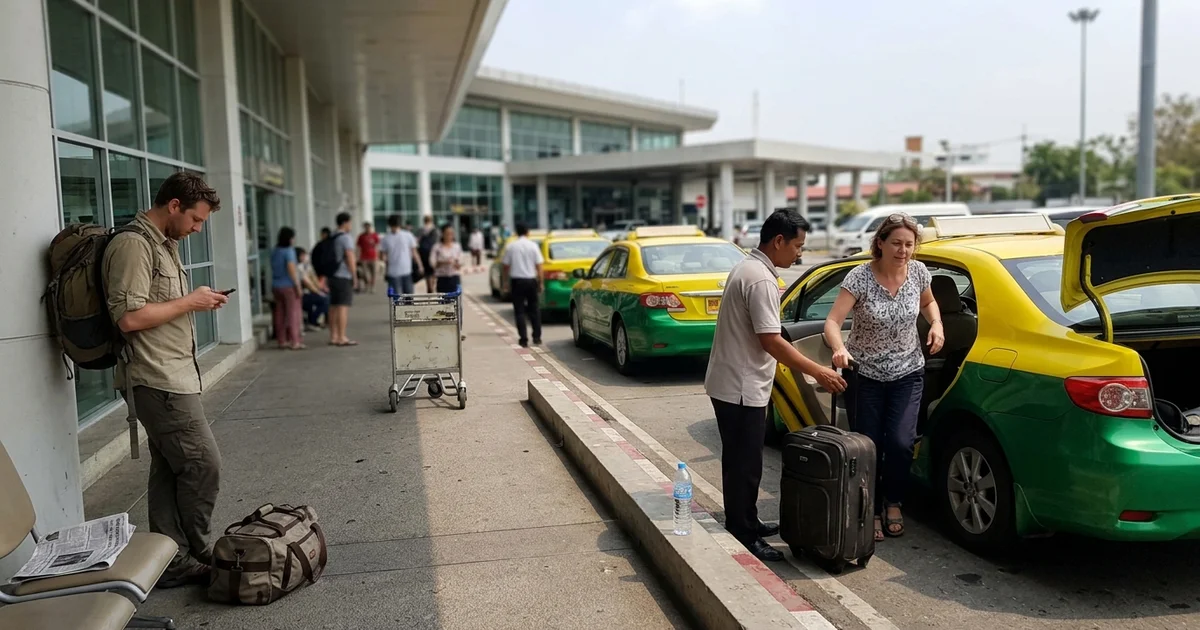
A genuinely convenient airport
Chiang Mai International Airport sits 10 to 15 minutes from the Old City. That proximity is one of the quiet pleasures of living here — no hour-long transfer, no committing half a day either side of a flight.
It’s compact, easy to navigate and rarely overwhelming. This guide sits under our day trips and nature hub.
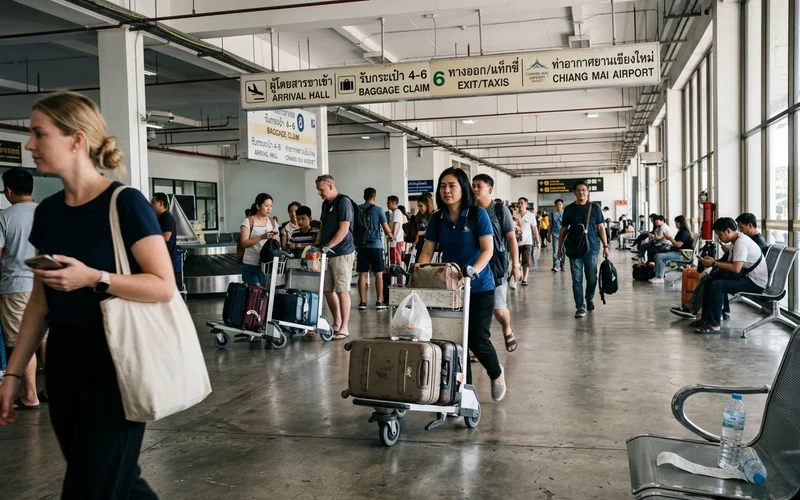
Getting to and from town
| Option | Roughly | Notes |
|---|---|---|
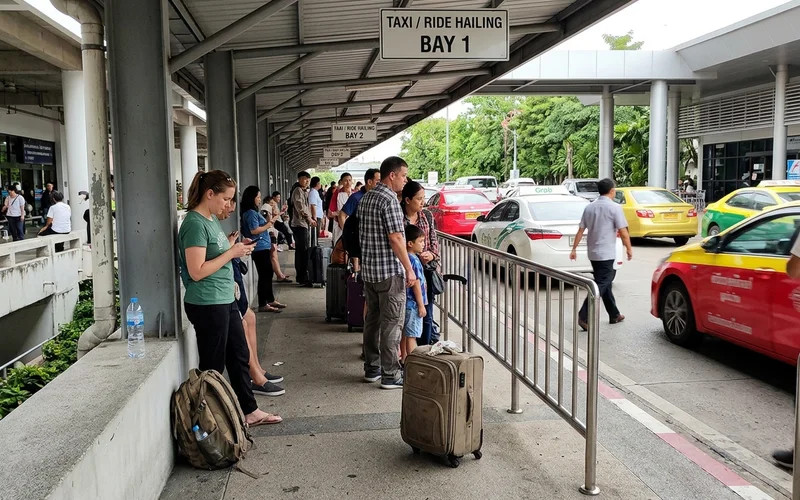
| Grab / Bolt / Maxim | 120–200 THB | Cheapest reliable option; use the designated pickup area |
| Airport taxi desk | 150–250 THB | Fixed price, pay at the counter inside, no negotiation |
| RTC Smart Bus | Low flat fare | Air conditioned, fixed route via the Old City and Nimman |
| Songthaew | Negotiable | Available but not the obvious choice here |
| Hotel transfer | Varies | Convenient, usually the most expensive |
Arriving: ignore anyone approaching you inside the terminal. Walk to the official taxi desk or follow the signs to the ride-hailing pickup area.
Departing: allow for traffic on the airport road at rush hour, which can double the journey time from the centre. If you’re flying in specifically for the mountains, our Doi Inthanon day trip guide is the obvious first excursion.
Our getting around guide covers the wider transport picture.
The terminal
Compact, on two levels, with domestic and international operating from the same building.
Landside: check-in, a few shops and cafés, ATMs, SIM card counters, currency exchange, car rental desks.
Airside: duty free, a reasonable spread of food, lounges, and gates that are never far from security.
Because it’s small, the whole experience from kerb to gate typically takes half an hour or less outside peak periods. It’s one of the more pleasant regional airports in Asia to fly from.
Where you can fly
Domestic. Very frequent connections to Bangkok — both Suvarnabhumi and Don Mueang — with multiple carriers and departures roughly hourly through the day. Also direct routes to Phuket, Krabi, Samui, Hat Yai, Udon Thani and other domestic destinations, with frequency varying by season.
Regional international. Direct routes to destinations across Asia, historically including Chinese cities, Taipei, Hong Kong, Singapore, Kuala Lumpur, Seoul, and points in mainland Southeast Asia. The specific route network changes with demand and seasons more than at a major hub, so check current schedules rather than assuming a route still operates.
Long haul. Not directly. You’ll connect through Bangkok, Singapore, Kuala Lumpur, Hong Kong or a Middle Eastern hub.
Practical tips
- Book domestic flights early for festival periods. Songkran and the November lantern festivals fill flights and lift prices sharply.
- Watch the Bangkok airport split. Suvarnabhumi and Don Mueang are different airports on opposite sides of the city. Connecting between them costs a couple of hours. Book through-tickets where you can.
- Lantern festival timing. Sky lantern activity affects air traffic in November, and schedules are adjusted most years. Check your flight status the day before if you’re travelling in that window.
- Get a SIM on arrival if you don’t have one. Counters are in the arrivals area and it takes ten minutes.
- Departure tax is included in ticket prices. There’s nothing extra to pay at the gate.
- Lounges are available and accessible with the usual card programmes.
Living near the flight path
Worth knowing if you’re choosing where to live: the approach runs over parts of the southern and western city. It’s not intrusive by international standards, and flights are limited overnight, but some areas hear more than others. Visit a prospective flat during the day and listen.