Getting Around
Getting a Thai Driving Licence at DLT Mae Hia
The step-by-step Thai driving licence process at Mae Hia DLT — Certificate of Residency, medical check, the written and practical tests, and documents.
6 min read
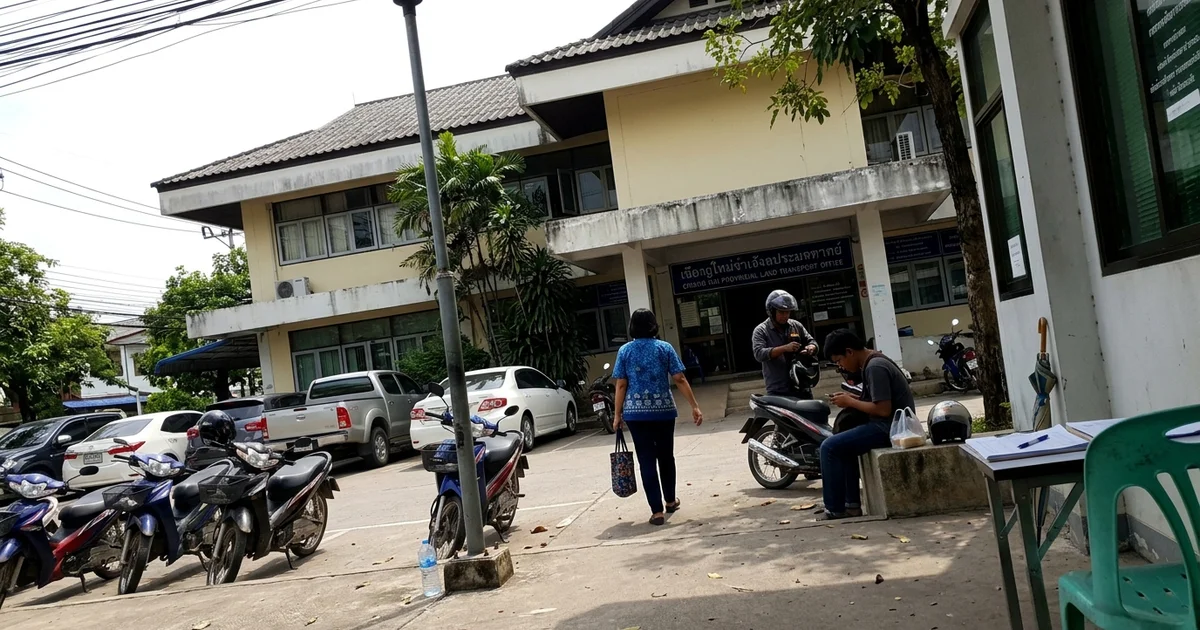
Why bother
Plenty of people ride in Chiang Mai for years on nothing. Here’s why getting the licence is worth a morning:
Insurance. Most travel and health policies exclude motorcycle accidents where the rider wasn’t correctly licensed. That exclusion turns a covered incident into a personal bill running to hundreds of thousands of baht.
Checkpoints. Routine, frequent, and they fine unlicensed riders.
It’s cheap and it lasts. A first licence runs for two years, then renews for five. The total cost is a few hundred baht plus your time.
Side benefits. A Thai licence often gets you the local rate at national parks, which pays for itself over a few day trips.
This guide sits under our getting around hub, alongside renting a scooter.
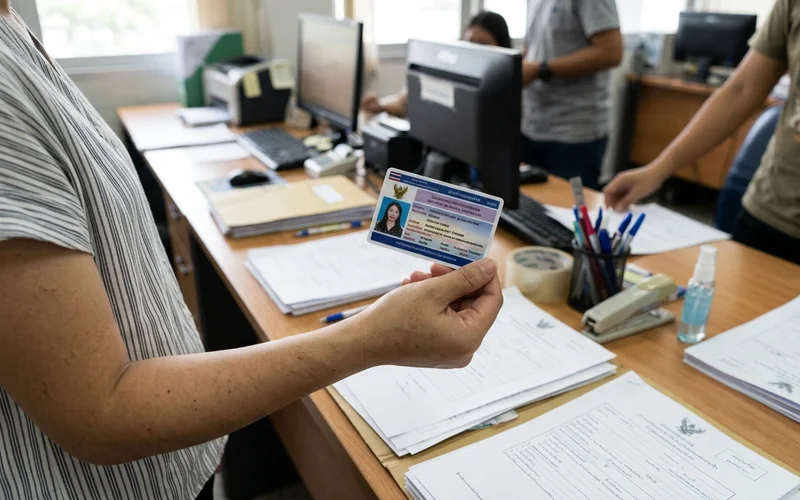
Before you go: two documents
Get these first. Turning up without them wastes the trip.
1. Certificate of Residency
A letter from Chiang Mai Immigration confirming your address. Apply at the immigration office with:
- Passport and copies of the photo page, visa and entry stamp
- Lease agreement
- TM30 receipt
- Passport photographs
- Completed application form
Processing time varies. Some embassies also issue residency letters, which the DLT accepts, though these are generally more expensive.
The COR is typically valid for a limited period, so time it close to your DLT visit.
2. Medical certificate
A short health check from any clinic or hospital. It takes ten minutes, costs very little, and produces a one-page certificate. Any local clinic can do it — there’s no need to go to a major hospital.
Like the COR, it has a short validity window. Get it within a few days of your DLT appointment.
What to bring
| Document | Notes |
|---|---|
| Passport | Original plus signed copies of photo page, visa, entry stamp |
| Certificate of Residency | Or embassy residency letter |
| Medical certificate | Recent |
| Home driving licence | Plus a copy; bring the IDP too if you have one |
| Passport photographs | Bring several |
| Cash | For fees; small notes |
| Pen | Genuinely useful |
Bring more copies than you expect to need, all signed.
On the day at Mae Hia
Arrive early. The office processes a capped number of applications per day and the queue forms before opening. Being there at opening is the difference between finishing before lunch and being told to come back tomorrow.
The sequence, roughly:
- Document check. Staff verify your paperwork and issue a queue number.
- Physical test. Colour recognition, depth perception, reaction time (a brake-pedal test) and peripheral vision. Straightforward for most people, but if you’re colour-blind, be aware this is where it matters.
- Safety video. A few hours of road safety instruction, sometimes available in English or with subtitles. Bring patience.
- Written theory test. Multiple choice, available in English. Study the practice questions beforehand — some translations are awkward and a few questions are counterintuitive.
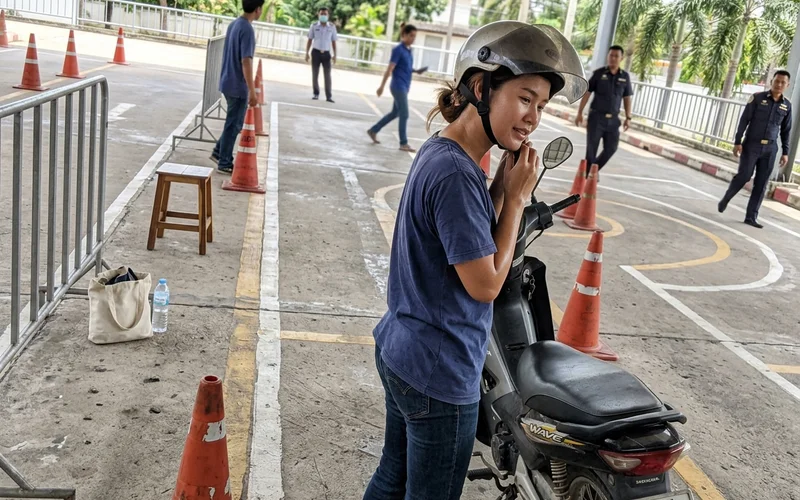
- Practical test. A short riding or driving assessment on a marked course. Often waived for holders of a valid equivalent home licence.
- Payment and issue. Photograph taken, licence printed, done.
Allow a full day for a first application. Renewals are much faster.
Practical tips
- Two licences, two processes. Motorcycle and car are separate. If you want both, apply for both on the same visit.
- Dress reasonably. Government office; smart-casual avoids friction.
- Bring your own vehicle if a practical test is required, or confirm in advance whether one is provided.
- Take snacks and water. It’s a long queue-based day.
- Study the theory questions. They’re available online in English, and thirty minutes of preparation removes the main failure risk.
- Check current requirements before going. Documentation requirements shift periodically.
Renewal
The first licence runs two years. Renewal extends it to five and is a much lighter process — usually a fresh medical certificate, the physical test again, and a shorter video. Set a reminder; renewing before expiry is far simpler than after.