Neighbourhood Guides
Santitham Neighbourhood Guide, Chiang Mai
A full guide to Santitham, Chiang Mai — its budget appeal, local food, who it suits, transport and cost, plus honest pros and cons.
6 min read
The value play
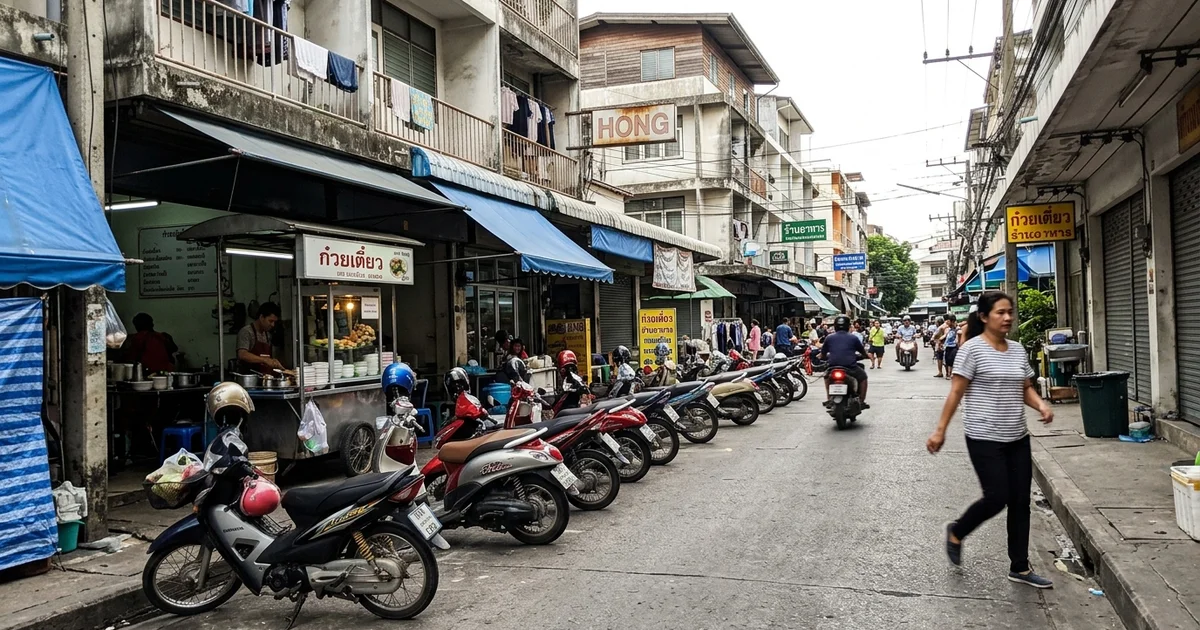
Santitham is the answer to a specific question: where do you live in Chiang Mai when you want to be central but don’t want to pay Nimman prices?
It sits immediately north-west of the Old City and directly east of Nimman, which puts it within a few minutes of both. Rents are lower, the food is better value, and the area has quietly developed one of the city’s more interesting independent café scenes. This guide sits alongside our other neighbourhood guides.
The character
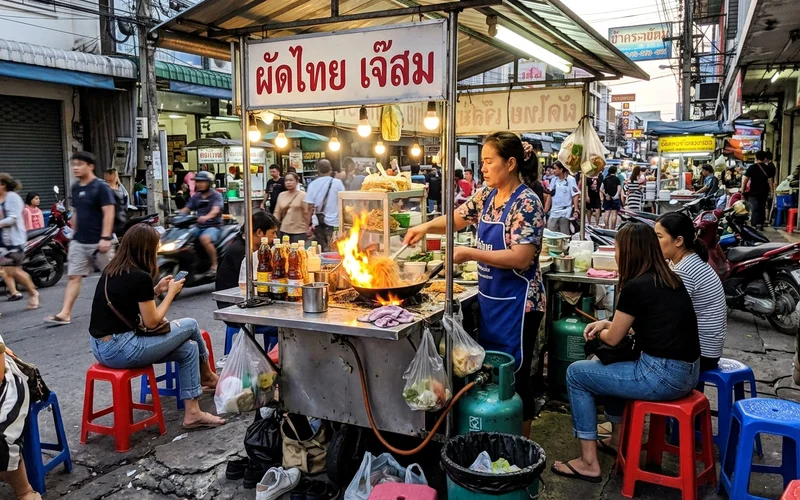
Santitham looks ordinary, and that’s the point. It’s a working Thai neighbourhood: apartment blocks, small shops, mechanics, laundries, noodle stalls and a lot of people going about their day.
Over the past decade a layer of small cafés, bars and restaurants has grown on top of that without displacing it. The result is somewhere you can eat a 45 THB lunch at a plastic table and get a good flat white two doors down.
It’s less polished than Nimman and less historic than the Old City — a contrast our Nimman versus Old City comparison works through in full. What Santitham has is authenticity that isn’t performed and prices that haven’t been adjusted for foreigners.
Living here
| Santitham | |
|---|---|
| Studio rent | 4,500–9,000 THB |
| 1-bedroom | 9,000–16,000 THB |
| Building stock | Mostly older low-rise apartments, some newer blocks |
| Walkability | Reasonable within the area, scooter helpful |
| Noise | Moderate; some busy roads, quiet interior sois |
| Food | Excellent local, growing café scene |
| Green space | Limited |
| Transport | Songthaew on main roads, scooter recommended |
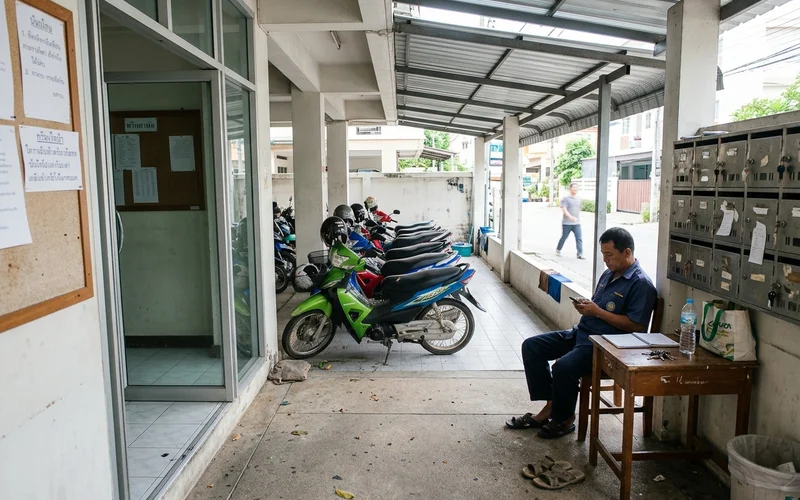
Building stock skews older, which means fewer pools and gyms and more straightforward apartments. For many people that’s a fair trade for the rent difference — see our rent by neighbourhood comparison for the numbers side by side.
The food
This is Santitham’s strongest card. The area has one of the best concentrations of everyday Thai food in the city — noodle shops, grilled meat stalls, evening street food, and morning markets that serve residents rather than visitors.
The prices are the real point. A meal that costs 200 THB in Nimman costs 60 THB here, and is frequently better.
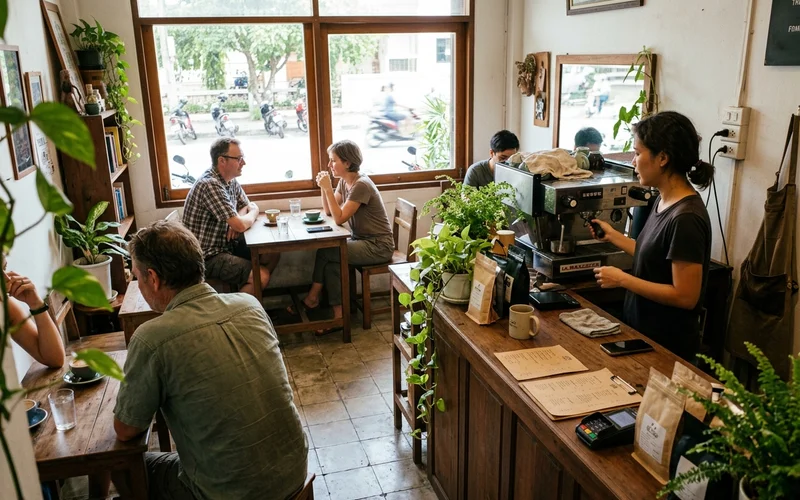
The café scene has followed, with a cluster of small independent places that are quieter and cheaper than their Nimman equivalents. If you work from cafés, Santitham increasingly rewards you for it — our guide to work-friendly cafés covers both areas.
Honest pros and cons
Pros
- Best value for a central location in Chiang Mai
- Excellent, cheap local food
- Between Nimman and the Old City, so everything is close
- Growing independent café and bar scene
- Genuinely local feel
Cons
- Older buildings, fewer facilities
- Less walkable than the Old City; you’ll want a scooter
- Some busy through-roads with traffic noise
- Fewer English-language services than Nimman
- Little green space and limited pavement in places
Who it suits
It suits long-stayers on a budget, people who’ve done a year in Nimman and want their money to go further, anyone who eats Thai food most days, and people who want a neighbourhood rather than a district.
It suits less well short visitors who want everything walkable, anyone who needs a modern building with a pool, and people who want the social scene of Nimman on their doorstep rather than fifteen minutes away.
The practical take
Santitham is where a lot of people end up, and almost nobody starts. If you’re new, spend your first month somewhere more obvious, then look here once you know how you actually spend your days.
If you already know you want value and don’t mind riding a scooter, you could reasonably start here and skip the expensive year.