Coworking & Remote Work
The Best Coworking Spaces in Chiang Mai
Chiang Mai's main coworking spaces — Yellow, Punspace, Alt_ChiangMai, Hub53 and more — with pass prices, Wi-Fi and community notes.
6 min read
The Chiang Mai coworking scene
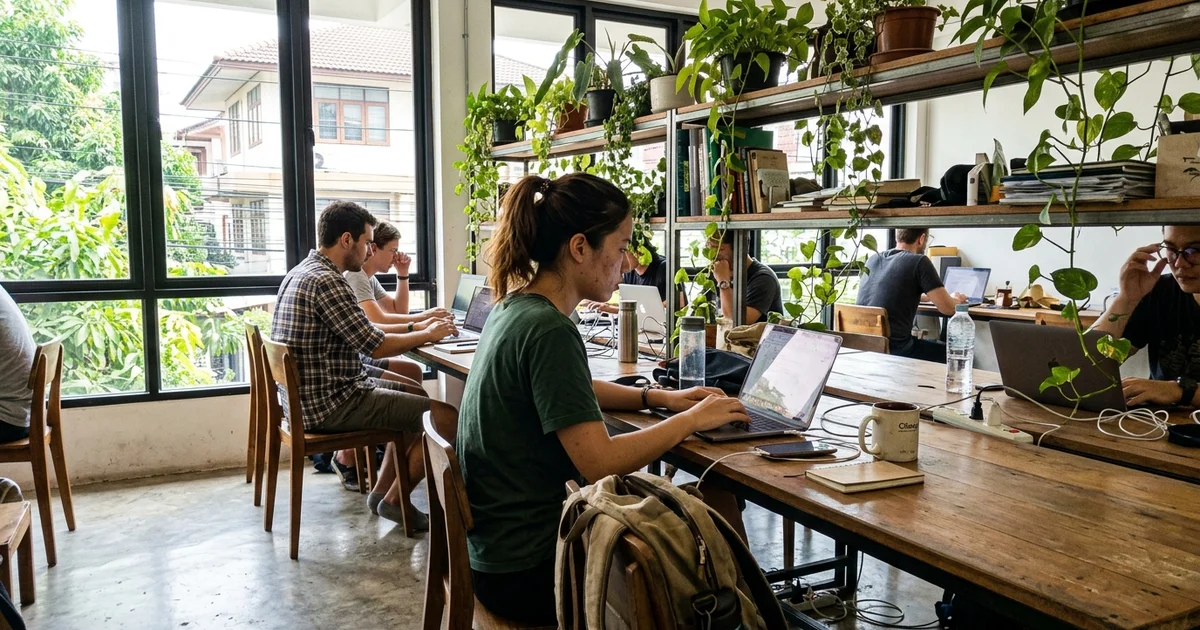
Chiang Mai has had a serious coworking scene for over a decade, which means the weak operators have long since closed and the survivors know what they’re doing. Prices are low, fibre is fast, and there’s genuine variety in the kind of space you can get.
The main decision isn’t which space is best in the abstract. It’s which of three types fits how you actually work. This guide sits under our coworking hub, which also covers connectivity and cafés.
The main spaces
Yellow Coworking
Community-forward, event-heavy, and one of the most social spaces in the city. Regular talks, workshops and meetups, a mixed crowd of founders, freelancers and remote employees. If you’ve just arrived and want to know people within a fortnight, this is the efficient answer.
Best for: newcomers, networkers, people who want their workspace to be a social base.
Punspace
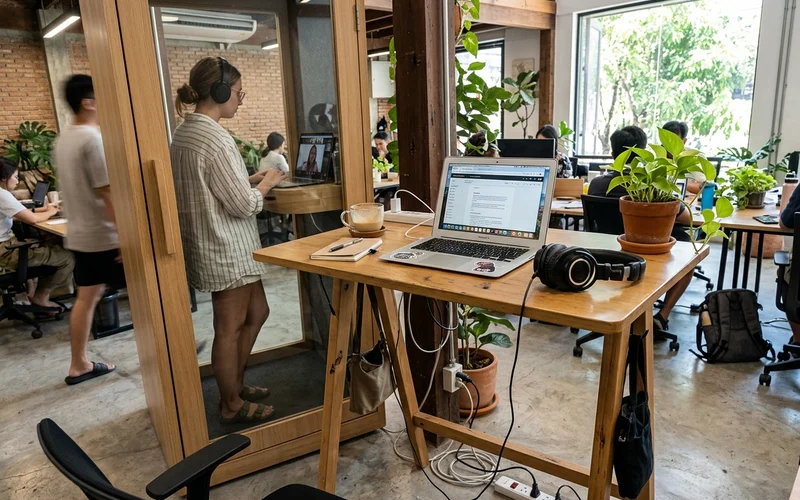
The long-standing functional option, with locations near Tha Phae and in the Wiang Kaew area. Quiet, reliable, air conditioned, and set up for people who want to sit down and work for eight hours. Less programming, more output.
Best for: heads-down work, long sessions, people who find open-plan socialising distracting.
Alt_ChiangMai
Combines coworking with accommodation, which removes the whole problem of finding a place to live for a short stay. Community-oriented, and popular with people arriving for a defined period rather than settling.
Best for: stays of one to three months, people who don’t want to sign a lease.
Hub53
Modern, well-equipped, with a strong community programme and good facilities. Sits between the Yellow and Punspace models — social enough to meet people, structured enough to get work done.
Best for: people who want both, and don’t want to choose.
CAMP (Maya)
Not a coworking space in the formal sense: a 24-hour study-and-work floor at the top of the Maya mall, free with a purchase from the café. Always busy, always open, and the default answer when you need a desk at 3am for a call with the US.
Best for: overflow, odd hours, occasional use.

Comparing them
| Space | Vibe | 24hr access | Call booths | Best for |
|---|---|---|---|---|
| Yellow | Social, event-led | Members | Yes | Meeting people |
| Punspace | Quiet, functional | Members | Yes | Deep work |
| Alt_ChiangMai | Live-work | Residents | Yes | Short stays |
| Hub53 | Modern, balanced | Members | Yes | Both |
| CAMP (Maya) | Public, busy | Yes | No | Odd hours, overflow |
Access hours, facilities and pricing change, so confirm current details directly before committing to a monthly plan.
How to choose
Take day passes at two or three spaces in your first week. It costs under 1,000 THB total and tells you more than any amount of reading.
What to test while you’re there:
- Speed test at your actual working hours, not at 10am when it’s empty.
- Sit for three hours. Chair comfort matters more than you think at month three.
- Take a call. See how the booth situation actually works in practice.
- Look at who’s there. Are these people you’d want to have lunch with?
- Check the commute. Fifteen minutes each way is fine; thirty will erode your usage.
Coworking versus a home desk
If you take a lot of video calls and have decent home fibre, a good desk at home plus occasional day passes often beats a full membership on both cost and convenience.
If you work better away from where you sleep, or you’re new and want the social infrastructure, a monthly membership is money well spent. Many long-term residents end up with both: home for calls, coworking for focus days and people.
For lighter sessions, our guide to work-friendly cafés covers the third option.