Visas & Immigration
How to Do Your 90-Day Report in Chiang Mai
A step-by-step TM47 90-day report walkthrough for Chiang Mai — drive-thru and walk-in options, online reporting, timing and what to bring.
5 min read
What the 90-day report is
If you stay in Thailand continuously for more than 90 days, you must notify immigration of your address. That notification is the TM47, universally called the 90-day report.
It is not a visa renewal, it doesn’t extend your permission to stay, and it has nothing to do with your visa type. Anyone on a long-stay visa — retirement, DTV, education, marriage — does it. It’s an address registration, and it’s covered here as part of our visa guide because it’s the piece of admin people encounter most often.
The clock resets every time you leave Thailand. If you fly to Kuala Lumpur for a weekend, your next report is due 90 days from your return, not from your last filing.
The timing window
You can file within a window that runs from 15 days before your due date to 7 days after it. Outside that window the system won’t accept it and you’ll be filing late.
Practical advice from people who’ve done this many times: file at the start of the window, not the end. Online submissions get rejected for opaque reasons and in-person queues get long. Fifteen days of buffer turns a potential problem into a minor inconvenience.
Put the due date in your calendar with a reminder two weeks before, every time you get a new receipt.
Your three options
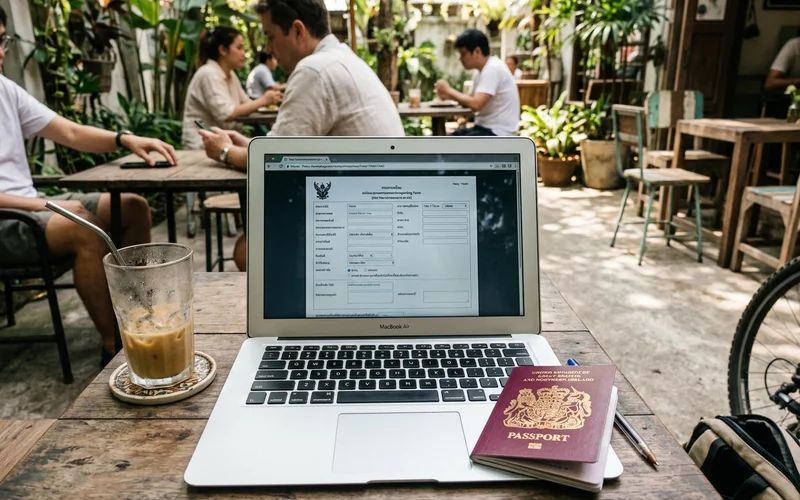
Online. The immigration e-service accepts 90-day reports from anywhere. When it works, it takes five minutes and you print or save the confirmation. When it doesn’t — and it regularly doesn’t near deadlines — you get an unhelpful error and no recourse. Try it first, but try it early.
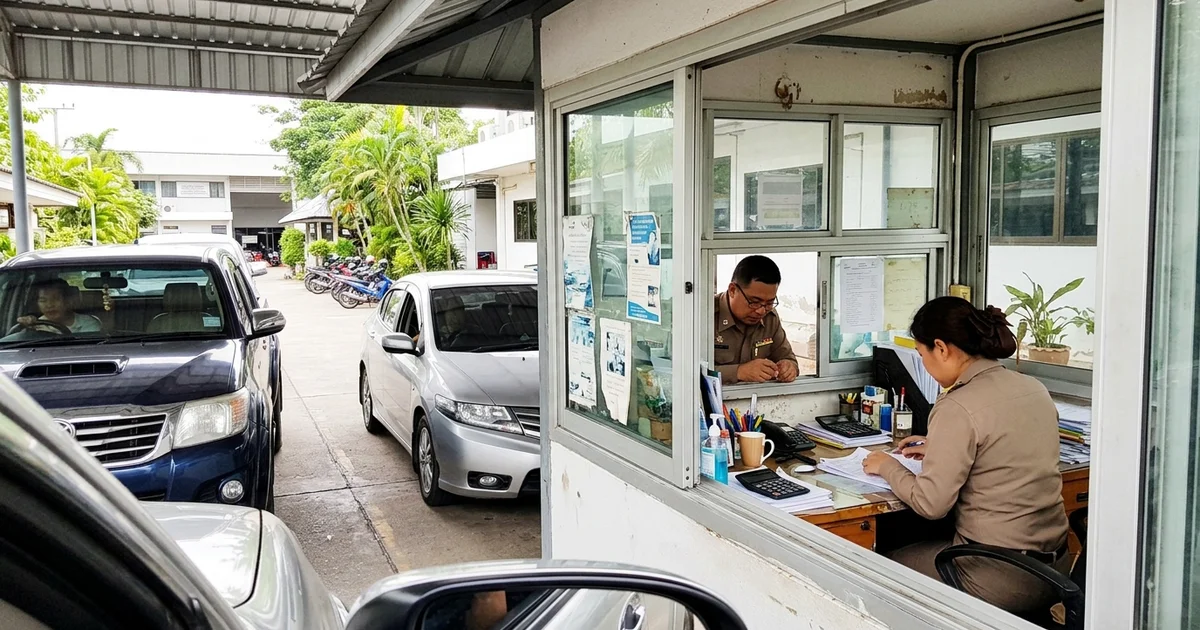
Drive-thru. Chiang Mai operates a drive-thru reporting window, which is genuinely one of the better pieces of public service design in the city. You queue in your vehicle, hand over the documents, and collect the stamped receipt without getting out. Fastest in-person option by a wide margin. Availability has changed periodically, so check before setting off.
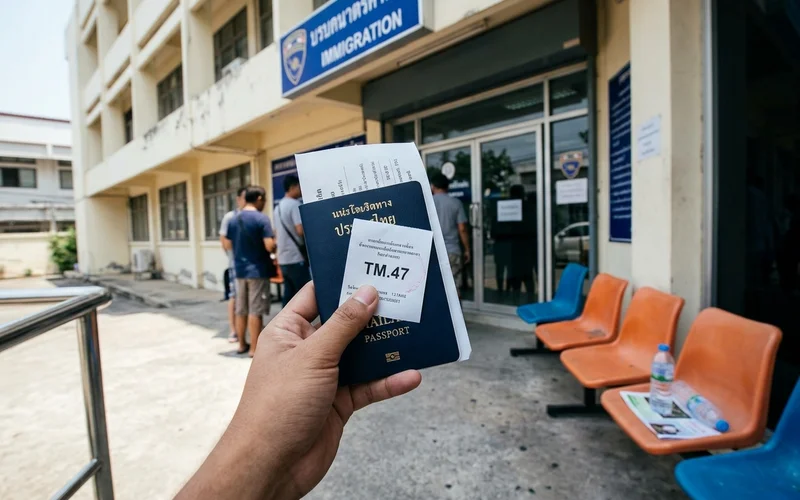
Walk-in. The counter service at the immigration office. Reliable, always available, but subject to queue tickets and the general rhythm of the office. Arrive early, particularly in the busy months.
There is also a postal option, which works but leaves you dependent on the return of your receipt by mail.
What to bring
For an in-person report:
| Item | Notes |
|---|---|
| Passport | Original, plus copies of the photo page and current visa/entry stamp |
| Departure card (TM6) | If you were issued one |
| Previous 90-day receipt | The slip stapled into your passport from last time |
| Completed TM47 form | Available at the office, or download and fill it in beforehand |
| Address details | Matching what immigration has on file from your TM30 |
Bring photocopies. The office may or may not have a copy service running, and a queue you’ve already waited in is a bad place to discover you need one.
Where to go
Chiang Mai’s immigration services have moved between locations over the years and specific counters handle specific tasks. Before you drive across the city, read our guide to the immigration office, which covers the current arrangement, hours and queue behaviour.
If you’ve missed it
Don’t panic and don’t ignore it. Go in, explain, pay the fine and get the new receipt. Immigration officers deal with this constantly and a voluntary late report is treated very differently from one discovered during an extension application or at a checkpoint.
The important thing is that the record shows you reporting, imperfectly, rather than not reporting at all.